
Class 3 English Worksheet on Adverbs and Verbs

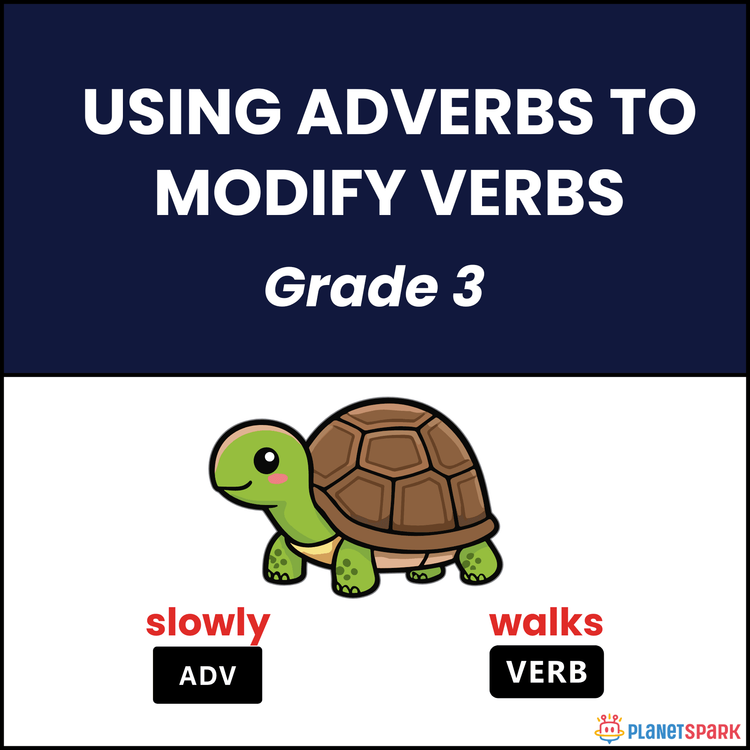
Class 3 English Worksheet on Adverbs and Verbs
Swift & Clear Actions: Adverbs That Power Verbs (Grade 3)
This Grade 3 English grammar worksheet focuses on Using Adverbs to Modify Verbs, helping young learners understand how actions can be described more clearly and meaningfully. Through simple, real-life sentences, students learn how adverbs tell us how, when, where, or how often an action happens.
Designed for primary learners, this worksheet uses engaging and age-appropriate tasks to strengthen grammar fundamentals. Students practice identifying and choosing the correct adverbs that best fit each sentence, improving both reading comprehension and sentence construction skills.
By working through these exercises, learners gain confidence in using adverbs correctly in everyday writing and speaking. This structured practice supports better expression, clearer communication, and a stronger foundation in English grammar for Grade 3 students.
Why Adverbs Matter in Grammar?
Adverbs help children add detail and clarity to actions by explaining how, when, where, or how often something happens. For Grade 3 learners, understanding adverbs is important because:
1. Adverbs make sentences more descriptive and interesting.
2. They help students clearly explain actions in speaking and writing.
3. They improve sentence accuracy and meaning.
4. They support better storytelling and paragraph writing skills.
5. They build a strong foundation for advanced grammar concepts.
What’s Inside This Worksheet?
This worksheet includes five thoughtfully designed grammar activities to help Grade 3 students master adverbs that modify verbs:
Exercise 1 – Choose the Correct Adverb
Students select the most suitable adverb from multiple options to complete each sentence. This builds understanding of how adverbs fit naturally with verbs.
Exercise 2 – Fill in the Blanks with the Right Adverb
Learners choose one adverb from a given pair, encouraging them to think about meaning, context, and sentence sense.
Exercise 3 – Match the Following
Students match sentences with the correct adverbs, strengthening comprehension and reinforcing different types of adverbs such as time, manner, and frequency.
Exercise 4 – Underline the Incorrect Adverb
This activity develops grammar awareness by asking students to identify and underline the adverb that does not fit the sentence.
Exercise 5 – Paragraph Writing with Adverbs
Students complete a short paragraph by filling in suitable adverbs, helping them apply grammar concepts in real-life writing contexts.
Answer Key (For Parents and Educators)
Exercise 1 – Choose the Correct Adverb
1. slowly
2. quickly
3. happily
4. quietly
5. gently
6. neatly
7. brightly
8. daily
9. suddenly
10. easily
Exercise 2 – Choose One Adverb from Each Pair
1. fast
2. loudly
3. quickly
4. carefully
5. rarely
6. yesterday
7. always
8. inside
9. suddenly
10. early
Exercise 3 – Match the Following
1. shortly
2. quietly
3. inside
4. often
5. immediately
6. yesterday
7. loudly
8. slowly
9. tomorrow
10. always
Exercise 4 – Underline the Incorrect Adverb
1. quickly
2. completely
3. sweetly
4. softly
5. lovingly
6. there
7. outside
8. yesterday
9. often
10. carefully
Exercise 5 – Paragraph Writing (Answers may vary)
1. The morning sun was shining brightly in the sky.
2. Since it was Sunday, I woke up early and stretched my arms.
3. I wanted to surprise my mom, so I made my bed neatly by smoothing out all the sheets.
4. Suddenly, a large dog outside began to bark loudly, which startled me!
5. I carefully walked to the window to see what was happening.
6. My little cat was stuck in a tree, but a kind neighbour climbed up bravely to rescue her.
7. After the rescue, my cat murmured thankfully in my arms.
8. My mom came into the room and smiled happily when she saw my tidy bed.
9. We immediately started eating our breakfast because it smelled delicious.
Make adverbs click with guided grammar practice your child will enjoy.
Frequently Asked Questions
A verb shows action or state, while an adverb describes how, when, or where an action happens, helping early learners add detail.
Look for words that modify verbs, adjectives, or other adverbs, often ending in -ly, such as quickly or softly.
They improve sentence clarity, making reading and writing more expressive in Class 3 grammar lessons.